
Lighting The Way To A Brighter Pond Experience
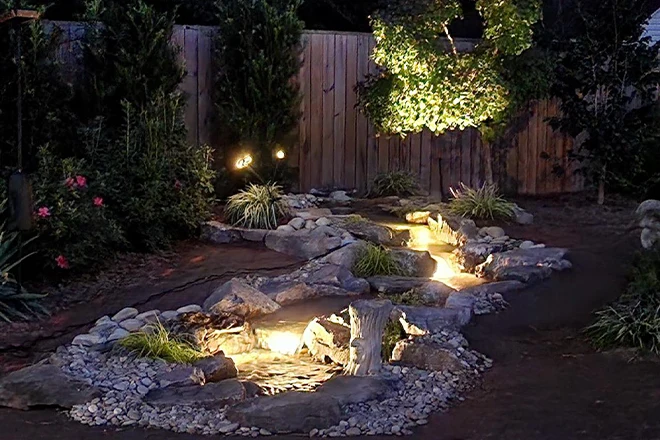
Ever found yourself squinting at your pond, trying to catch a glimpse of your koi as the sun sets? Or wondered why your pond looks less enchanting at night compared to the picturesque images you’ve seen of others?
Well, the secret lies in the type of lighting you choose.
In this post, we’ll dive deep into the world of LED vs. halogen pond lights, guiding you through their pros and cons.
By the end, you’ll know more about pond lighting (and underwater pond lights) and which of these types will make your North Augusta pond shine best.
Halogen lights have been the traditional choice for pond illumination.
They work by passing an electric current through a tungsten filament inside a quartz envelope filled with halogen gas. This produces a warm, visible light but also emits heat due to infrared light.
While they’re efficient compared to older incandescent bulbs, they still use more energy than LEDs.
LED, or Light Emitting Diodes, are the modern contenders in pond lighting.
They produce light when electricity flows through a semiconductor, making them more energy-efficient than halogens. LEDs offer a cooler, customizable light, making them increasingly popular for underwater pond lights.
They’re a top pick for those aiming to illuminate their ponds efficiently and stylishly.
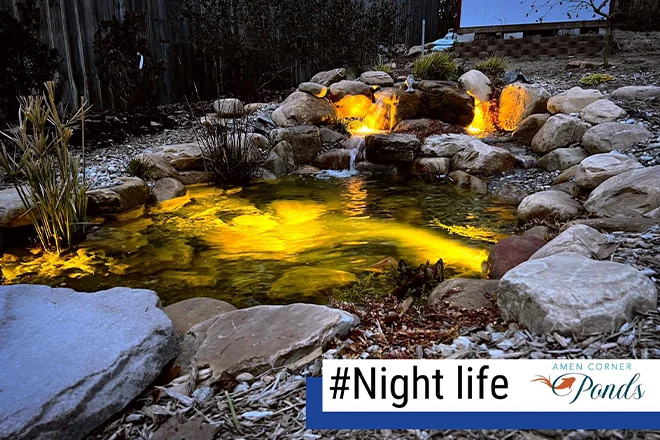
LED lights are champions of efficiency. They consume significantly less power than their halogen counterparts while producing the same amount of light.
While halogen bulbs might give that classic glow, they do so at the cost of higher energy consumption.
For North Augusta residents keen on reducing their energy bills, especially with a water feature running, LEDs are the way to go.
Brightness is a game of balance, especially when it comes to LEDs vs. halogens. Too much can overpower the natural beauty of a pond, while too little can leave it lurking in the shadows.
LED pond lights produce a directed and whiter light, perfect for those who prefer a modern, crisp illumination. The range of color temperatures available with LEDs also means you can customize the ambiance to your liking.
On the other hand, halogen lights emit a softer, yellowish glow, reminiscent of cozy evenings by the pond.
In the North Augusta area, where natural beauty abounds, choosing the right lighting (and pond lighting ideas) can make all the difference.
LED lights, with their compact size and diverse color temperatures, can enhance the aesthetics of plants, fish, and other pond features.
Halogen lights, with their classic glow, can add a touch of nostalgia to your water feature.
LED bulbs are known for their impressive lifespan, often outlasting halogen bulbs by years. This means fewer replacements and less maintenance over time.
However, halogen pond lights, while having a shorter lifespan, can sometimes be easier to replace in traditional fixtures. Maintenance challenges with halogens, especially with underwater pond lights, include dealing with the heat they produce and ensuring they remain waterproof.
Pond lights, especially in places like North Augusta, need to withstand various weather conditions. From the scorching summer sun to the occasional frosty winter night, your lights should shine through it all.
Halogen lights, with their glass envelopes, can sometimes be sensitive to sudden temperature changes.
On the flip side, LED lights are generally more resilient, making them a preferred choice for underwater pond lights. Additionally, LEDs tend to have better resistance against water salinity and mineral content.
When considering pond lights, it’s not just the upfront cost that matters but the long-term expenses too.
While halogen bulbs might come at a lower initial price, their energy consumption can rack up your bills over time.
LEDs, though sometimes pricier at the outset, consume a fraction of the wattage halogens do. This means that over time, you might end up saving a considerable amount with LEDs, especially when you factor in the reduced frequency of bulb replacements.
Discover the cost of pond lights for your water feature.
In today’s eco-conscious world, every watt counts, adding to the LEDs vs. halogens debate.
Halogen lights, with their higher energy consumption, can leave a larger carbon footprint. Moreover, the heat they emit can sometimes promote unwanted algae growth in ponds and fountains.
LEDs, consuming less power, are the greener choice. Their cooler operation means a healthier environment for your pond’s inhabitants and less algae to worry about during your routine pond maintenance.
When dealing with electrical installations near water, especially with underwater pond lights, caution is paramount.
Halogen lights, due to their heat emission, require careful handling and placement to avoid potential hazards. The glass envelopes can get scorching, so it’s essential to ensure they’re out of reach of curious hands or pets.
LED pond lights run cooler and present fewer heat-related risks.
When it comes to lighting up your North Augusta pond or fountain, adaptability is key.
Halogen lights, with their classic glow, have been a staple for years. They’re versatile in terms of placement and can be used in various fixtures. However, their heat emission can sometimes limit where they can be placed, especially in smaller ponds where overheating can be a concern.
LED lights, with their compact size and cooler operation, allow them to be placed in tighter spots, even directly within water streams or close to delicate plants. Plus, with a range of color temperatures available, LEDs offer the flexibility to create different moods and atmospheres, from a serene moonlit pond to a vibrant party-ready fountain.
The world of underwater pond lights isn’t just about the bulb. It’s also about how these lights integrate with other systems. Whether you’re looking to set a timer for your lights, dim them for a more intimate setting, or even control them remotely, compatibility is crucial.
Halogen lights, being around for a longer time, often fit seamlessly into older systems. However, they might not always be compatible with newer, smart control systems without some adjustments.
LEDs, being a more modern lighting solution, often come ready for integration with advanced systems. Whether it’s a solar power setup, a smart home system, or even a remote-controlled dimmer, LED lights are often at the forefront of technological compatibility.
The world of pond lights is ever-evolving, and staying updated with the latest innovations can make all the difference.
While halogen lights have seen improvements over the years, especially in terms of energy efficiency and bulb lifespan, the real game-changers have been in the LED sector. From bulbs that can change colors at the touch of a button to those that can simulate the gentle ebb and flow of natural light, the possibilities are endless.
For North Augusta residents keen on having the latest and greatest in pond lighting, LEDs are the way to go.
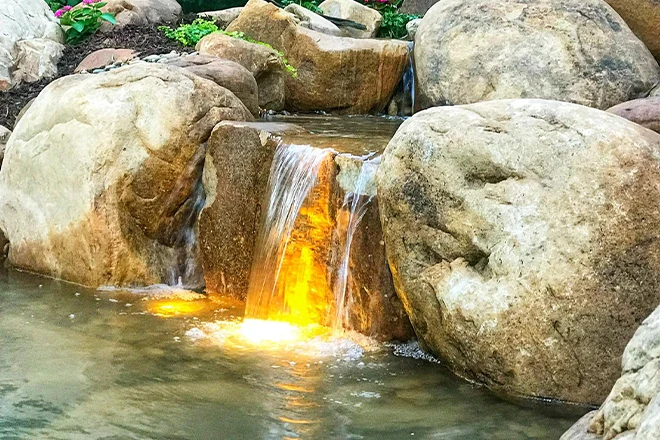
When it comes to choosing between LEDs and halogens for your pond, understanding the pros and cons of each can help you make an informed decision.
Your choice between LED and halogen pond lights should be based on your specific needs and preferences. Here are some factors to consider:
For those looking to go green, combining solar power with energy-efficient LEDs can be a game-changer. Solar panels can harness the sun’s energy during the day, storing it to power your LED pond lights at night. It’s an eco-friendly and cost-effective solution that takes advantage of those sunny North Augusta days.
There are also solar underwater pond lights!
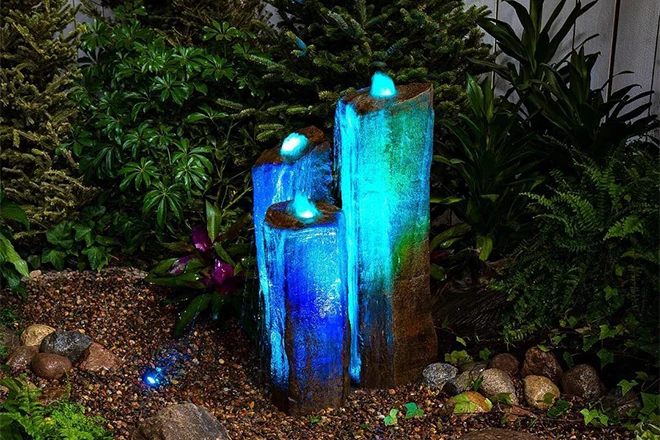
Highlighting: Both LED and halogen lights can be used for highlighting specific features in your pond, be it a beautiful koi fish or a unique water plant. The choice of bulb can affect the intensity and color of the highlight.
Spotlighting: Spotlighting is all about drawing attention to a particular area or feature. While halogens offer a warm spotlight, LEDs can provide a more intense, directed beam.
Wash Lighting: For a broad illumination of your pond, both LEDs and halogens can be used. However, LEDs often offer more uniform lighting, while halogens can create softer shadows.
It’s all up to what you want when it comes to LEDs vs. halogens. Check out these other pond lighting techniques as well.
We hope this dive into LED vs. halogen pond lights (above and underwater pond lights) has illuminated your path to making the best choice for your North Augusta pond.
At Amen Corner Ponds, we understand the nuances of pond lighting and are here to help. Whether you’re looking for installation, maintenance, or just some friendly advice, we’ve got you covered.
Ready to light up your pond life? Fill out our contact form today, or give us a call. Let’s make your pond shine brighter than ever!

The Finest Pond Contractor In North Augusta, SC. Hundreds of Homeowners have trusted us to bring nature to their doorstep.
Formerly Amen Corner Ponds

